The Evolution of Standard Tuning and Chord Development in Guitar Music
The evolution of standard tuning for the guitar and the development of chords are intricate processes deeply intertwined with the history of music and the evolution of the instrument itself. To understand the origins of standard tuning, we must first journey back to the early history of the guitar, tracing its lineage through ancient stringed instruments like the lute and oud. These predecessors laid the groundwork for the emergence of the guitar as we know it today, with its characteristic six strings and fretted neck. However, in the absence of a standardized tuning system, guitarists of antiquity often employed a variety of tunings based on regional traditions and individual preferences. Open tunings, in which the strings are tuned to form a chord when strummed open, were common in folk and traditional music, providing a rich harmonic palette for players to explore. Yet, the lack of uniformity posed challenges for musicians seeking to communicate and share their music across geographical boundaries.
It wasn't until the Baroque and Classical eras that we see the emergence of more standardized tuning systems for the guitar. Luthiers and composers of the time began to advocate for tuning schemes that facilitated the execution of complex musical compositions and enabled greater harmonic possibilities. One of the key figures in this movement was Antonio de Torres, a renowned Spanish luthier whose innovations in guitar design and construction revolutionized the instrument. Torres' guitars featured a larger body size, enhanced projection, and improved playability, laying the foundation for the modern classical guitar as we know it. Alongside advancements in instrument design, composers such as Francisco Tárrega began to explore new harmonic territories, experimenting with chord progressions and voicings that pushed the boundaries of traditional tonal harmony.
As the guitar gained prominence as a concert instrument in the 19th and 20th centuries, standard tuning became increasingly standardized, paving the way for the widespread adoption of a common tuning system across musical genres. Influential guitarists such as Andrés Segovia played a crucial role in popularizing standard tuning, advocating for its use in classical repertoire and concert settings. Segovia's virtuosic performances showcased the expressive potential of the guitar, demonstrating the versatility and range of the instrument within a standardized tuning framework. Similarly, in the realm of popular music, artists like Robert Johnson and Jimi Hendrix pushed the boundaries of guitar playing, exploring new chord voicings and tunings that expanded the sonic palette of the instrument.
 |
| Robert Johnson |
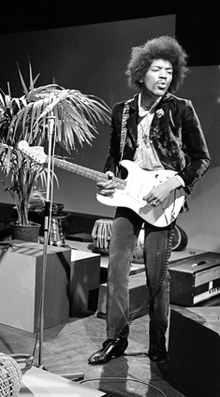 |
| Jimi Hendrix |
The development of chord theory has also played a significant role in shaping the evolution of guitar music. From the early concepts of consonance and dissonance to modern harmonic principles, theorists and composers have sought to understand and codify the underlying principles of chord structure and progression. Theoretical concepts such as chord inversions, extensions, and substitutions have provided guitarists with tools for creating rich, nuanced harmonies that enhance the expressive potential of their music.
In conclusion, the creation of standard tuning for the guitar and the development of chords are ongoing processes that reflect the rich tapestry of musical innovation and creativity. From the ancient origins of the instrument to the present day, guitarists have continued to explore new techniques, tunings, and harmonic possibilities, pushing the boundaries of what is possible on six strings. As we look to the future, it is clear that the guitar will remain a vibrant and dynamic instrument, continuing to inspire generations of musicians to come.