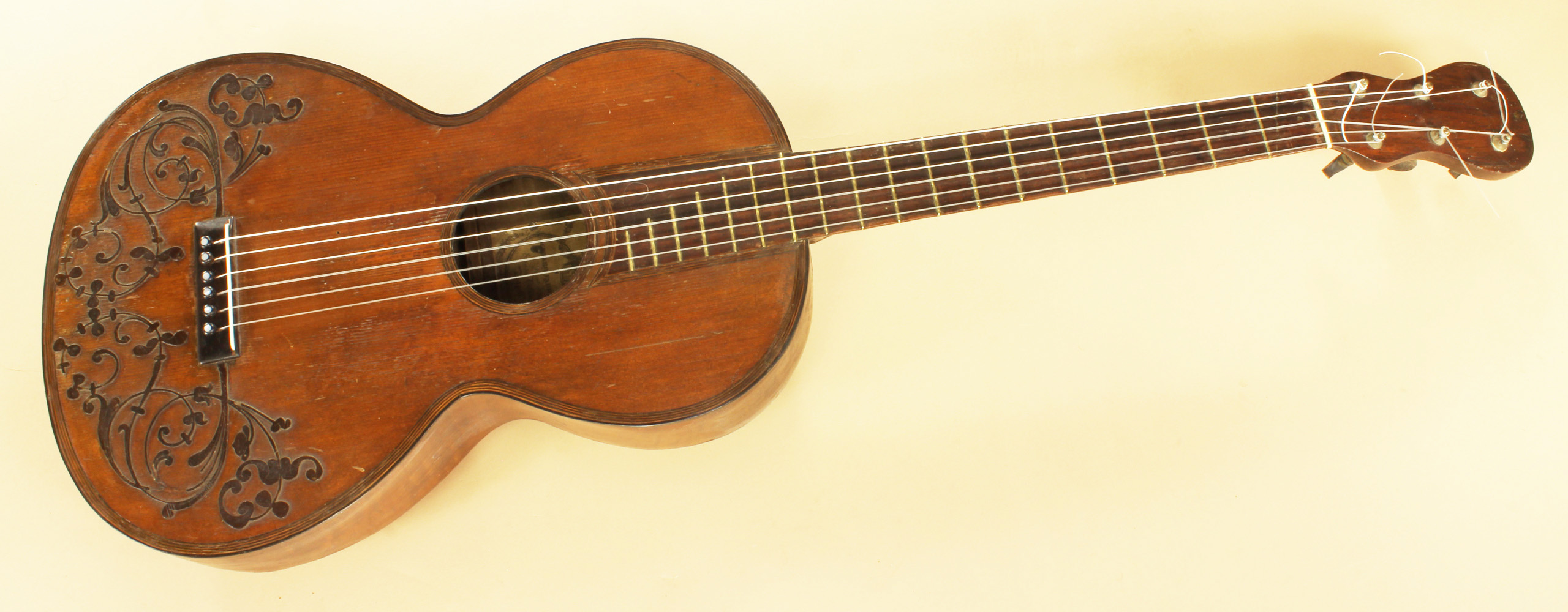
Evolution of the Guitar From Ancient Origins to Modern Mastery
HISTORY
The lineage of the guitar can be traced back to ancient civilizations, where the earliest stringed instruments were crafted. Mesopotamian, Egyptian, and Babylonian cultures all had variations of stringed instruments, laying the groundwork for what would eventually become the guitar. These instruments, such as the ancient Greek kithara and the Persian tanbur, featured varying numbers of strings and were played using techniques that would later influence guitar playing.
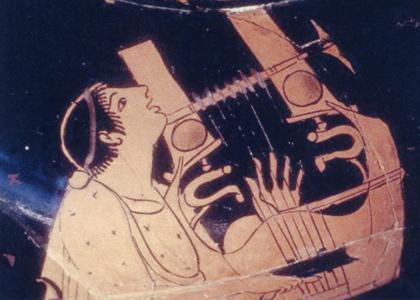 |
| Ancient Greek kithara |
 |
| Persian Tanbur |
Medieval Migration and Influence:
During the medieval period, the guitar's predecessors began to take shape across Europe. The Arab conquest of Spain in the 8th century introduced the oud, an ancestor of the guitar, to the Iberian Peninsula. The oud's distinctive pear-shaped body and fretless neck captivated European musicians and contributed to the development of stringed instruments like the lute.
 |
| The Lute |
Renaissance Resonance:
By the Renaissance era, the lute had become a popular instrument across Europe, showcasing features that foreshadowed the modern guitar. With its rounded body, fretted neck, and multiple strings, the lute served as a bridge between ancient stringed instruments and the guitar's eventual emergence. Its popularity spurred innovation in instrument design and music composition, paving the way for the guitar's evolution.
Emergence of the Guitar-Like Instruments:
As the Renaissance gave way to the Baroque period, instruments with characteristics akin to the guitar began to emerge. In Spain, the vihuela gained popularity, featuring a guitar-like body and shape. Meanwhile, in England, the gittern and the later English guitar showcased similar design elements. These instruments, while not yet fully developed guitars, demonstrated the growing interest in stringed instruments with fretted necks and plucked strings.
 |
| The Vihuel |
The Birth of the Modern Guitar:
The 19th century witnessed significant advancements in guitar design and construction. Spanish luthier Antonio de Torres is often credited with revolutionizing guitar design with his introduction of the fan-bracing system. This innovation, along with other improvements in construction techniques, enhanced the guitar's tone, volume, and playability, laying the groundwork for the modern classical guitar.